No Script, No Problem: How Live Streamers Are Dismantling the Old Celebrity Playbook
There was a time when becoming a celebrity meant landing a record deal, scoring a network pilot, or getting discovered at the right party in the right zip code. Fame had gatekeepers — studios, labels, talent agencies — and if you couldn't get past them, you stayed invisible. That world didn't just evolve. It got body-slammed by a generation of creators who pointed a webcam at their face and hit "Go Live."
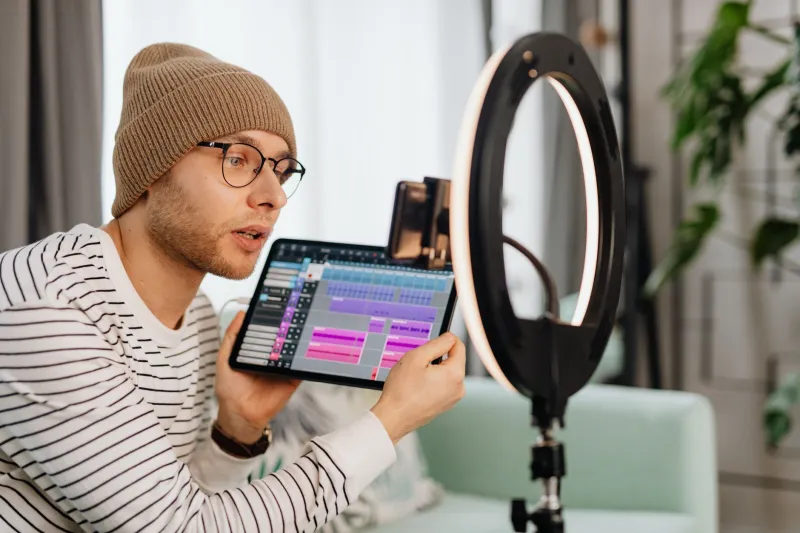
Today, some of the most-watched entertainers in America don't have agents. They don't have stylists. Half of them are broadcasting from a spare bedroom with ring light shadows on the wall. And audiences? They're absolutely eating it up.
The Numbers Don't Lie
A 2023 Deloitte survey found that nearly 60% of Gen Z and millennial consumers said they trusted content from independent creators more than content produced by major entertainment brands. Meanwhile, Nielsen data consistently shows that live streaming engagement — measured by average watch time and return viewership — outpaces recorded content on virtually every metric for viewers under 35.
Platforms like Twitch, YouTube Live, and TikTok Live have collectively logged billions of hours of live content consumption in the past two years alone. That's not a niche hobby. That's a cultural shift.
The appeal isn't hard to decode. When a live streamer spills their coffee mid-sentence, laughs about it, and keeps going, that moment is real. When a traditional celebrity does a "candid" interview, it's been workshopped with a PR team. Audiences can feel the difference, and increasingly, they're choosing authenticity over artifice.
Talking to the People Actually Living It
We reached out to several creators who've built substantial followings through live content to get their take on what's driving this shift — and what it costs them personally.
Marcus T., a 28-year-old variety streamer based out of Atlanta who averages 40,000 concurrent viewers on his nightly broadcasts, put it bluntly: "People watch me because I'm not trying to sell them a version of myself. If I'm tired, they see that. If something's bothering me, it comes out. You can't fake six hours of live content every night."
That transparency, he says, is both his biggest asset and his biggest vulnerability. "There's pressure — real pressure — to never have a bad day on camera. But I think the audience respects it more when you do. They're not looking for perfection. They're looking for someone who's actually there."
Jenna R., a lifestyle and wellness streamer from Portland with a following that's grown from 3,000 to over 200,000 in eighteen months, describes a similar tension. "Traditional celebrities have teams that manage their image. I am my own team. That's exhausting, but it also means every mistake I make on stream is just... mine. And weirdly, those are the moments people clip and share the most."
What Polished Productions Are Getting Wrong
Hollywood isn't oblivious to this trend. Studios have tried to manufacture authenticity through reality TV for decades, but even that format — once considered raw — now feels staged to younger viewers who've grown up watching unedited live streams. The difference between a reality show confessional and a streamer's 3 a.m. emotional rant is the same as the difference between a rehearsed speech and an actual conversation.
Late night talk shows, once the gold standard of celebrity accessibility, have seen viewership crater. The format still exists, but it's competing with creators who can go live at any hour, interact directly with their audience in real time, and pivot the entire conversation based on what the chat is saying. That interactivity isn't just a feature — it's the whole point.
Traditional celebrities are starting to take notes. More A-listers are showing up unannounced on Twitch streams or doing impromptu Instagram Lives precisely because their publicists have realized that unpolished moments generate more genuine buzz than a perfectly lit magazine spread. But there's an authenticity ceiling when you're a household name trying to act casual. Audiences sense the performance.
The Pressure to Stay Real
Here's the irony at the center of all this: as live streamers grow their audiences, they face increasing pressure to become more like the traditional celebrities they're replacing. Sponsorships require brand-safe behavior. Larger platforms push creators toward more structured content. The very authenticity that built the audience can start to feel like a product.
"I've had brand deals fall through because I said something honest on stream that wasn't 'on message,'" Marcus told us. "At some point you have to decide — are you building a brand or are you actually being yourself? I'm still trying to figure that out."
Jenna echoes the sentiment. "The moment I started worrying about what I looked like on camera was the moment my engagement dipped. My audience noticed before I did."
This tension — between scaling up and staying genuine — is the defining challenge of the live streaming era. The creators who navigate it successfully tend to be the ones who treat their community as collaborators rather than consumers. They let their audience in on the process, including the messy parts.
What This Means Going Forward
The death of traditional celebrity culture has been declared prematurely before. Movie stars and pop icons aren't going anywhere. But the monopoly on public attention that those figures once held? That's gone, and it's not coming back.
What's emerging in its place is a more fragmented, more personal, and arguably more democratic version of fame — one where a guy streaming from his Atlanta apartment can draw the same audience as a primetime TV show, and where the most viral moments aren't manufactured. They happen in real time, unplanned, and completely live.
At TTLive.tv, we've watched this transformation unfold in real time. And if the data, the creator interviews, and the shifting viewership numbers are telling us anything, it's this: the future of entertainment isn't scripted. It's streaming.
And it's already live.